7 Best HIPAA-Compliant Practice Management Software Options in 2026

Picking hipaa compliant practice management software shouldn't take three months of demos and legal reviews, but for most practices it does. You're juggling scheduling, billing, patient records, and a compliance checklist that seems to grow every year, and one wrong vendor choice means audit risk or a platform your staff refuses to use. That's the problem this list solves.
Below you'll find seven platforms worth evaluating in 2026, each vetted for real HIPAA compliance (not just a marketing claim on a pricing page) and genuine practice management depth, from appointment scheduling to claims and patient communication. If you're really shopping for hipaa-compliant ehr software to handle clinical documentation alongside the business side of your practice, several options here cover both.
We'll break down what each platform does well, where it falls short, and who it fits best, whether you're a solo provider, a growing multi-location group, or a healthcare supplier connecting to multiple EHRs. If your practice also needs to pull or push patient data from Epic, Cerner, or Allscripts, keep reading past the list. We'll cover how integration platforms like SoFaaS fit into your compliance and interoperability strategy.
1. SimplePractice
SimplePractice built its reputation with solo therapists and small behavioral health practices, and it's still the platform most clinicians mention first when you ask about HIPAA-compliant practice management software. It combines scheduling, billing, telehealth, and client documentation in one dashboard, which matters if you're tired of stitching together three separate tools that don't talk to each other.

How it works
Practices sign up directly through SimplePractice's website and get access to a client portal, calendar sync, and templated intake forms within a day. There's no IT department required. You customize note templates for your specialty (therapy, occupational therapy, speech-language pathology, and similar fields are well supported), connect your calendar, and start booking. Insurance billing runs through the same interface, including electronic claims submission and eligibility checks.
Key HIPAA compliance features
SimplePractice signs a Business Associate Agreement (BAA) with every subscriber, which is the baseline requirement under the HHS HIPAA Security Rule for any vendor handling protected health information. Beyond the BAA, the platform offers:
- Encrypted data storage and transmission
- HIPAA-compliant telehealth with end-to-end encryption
- Audit logs tracking who accessed what and when
- Role-based access controls for group practices
A BAA on paper means nothing if the platform's actual infrastructure doesn't back it up, so check for audit logging and encryption specifics before you sign.
Who it's for
Solo practitioners and small group practices in behavioral health, wellness, and allied health fields get the most value here. If your practice runs fewer than 15 providers and doesn't need deep EHR interoperability with hospital systems, SimplePractice covers nearly everything you need without custom development. Larger multi-specialty groups or practices needing tight integration with hospital EHRs will outgrow it faster.
Pricing
SimplePractice uses tiered monthly pricing based on features rather than provider count for solo users, with group practice plans scaling by seat.
| Plan | Monthly Cost (approx.) | Best For |
|---|---|---|
| Starter | ~$29/month | New solo practitioners |
| Essential | ~$69/month | Established solo practices |
| Plus | ~$99/month | Group practices with billing needs |
Pricing shifts periodically, so confirm current rates before budgeting.
2. Epic Systems
Epic dominates the hospital EHR market, and if your practice sits inside or partners with a hospital system, you've probably already touched it. Epic's practice management tools live inside the same platform as clinical documentation, so scheduling, billing, and charting pull from one patient record instead of syncing across systems.

How it works
Health systems implement Epic through a formal build process that typically takes months, not days. Your IT team or an Epic-certified consultant configures workflows, order sets, and billing rules specific to your specialty before go-live. This isn't software you self-serve; Epic sells through enterprise contracts and expects dedicated staff to manage the system long-term.
Key HIPAA compliance features
Epic's infrastructure includes:
- End-to-end encryption for data at rest and in transit
- Granular, role-based access controls down to the field level
- Detailed audit trails for every chart access
- A vetted developer program (App Orchard) for third-party apps touching patient data
Enterprise-grade compliance comes standard with Epic, but so does enterprise-grade complexity for anyone trying to connect an outside app to it.
Who it's for
Large hospital systems, academic medical centers, and multi-specialty groups with dedicated IT budgets are Epic's core customers. Solo practices and small clinics rarely qualify or can't justify the cost. If your app or service needs to pull data from Epic without building that integration from scratch, a platform like SoFaaS's Epic connector handles the SMART on FHIR handshake for you.
Pricing
Epic doesn't publish pricing. Expect enterprise-scale quotes running into six or seven figures depending on system size and modules deployed.
3. Athenahealth
Athenahealth built its name on a cloud-based model that bundles practice management, billing services, and clinical documentation without requiring a large on-site server setup. Ambulatory practices and specialty clinics that want HIPAA-compliant EHR software without hospital-scale complexity tend to land here after outgrowing smaller tools.
How it works
Practices onboard through athenahealth's implementation team, which configures your specialty templates, payer connections, and billing rules before go-live. Unlike Epic, this typically takes weeks rather than months. The platform also includes a managed billing service where athenahealth staff handle claims follow-up, which sets it apart from tools that only give you the software and leave collections to your team.
Key HIPAA compliance features
Athenahealth maintains SOC 2 compliance and signs BAAs with all customers. Core protections include:
- Encrypted patient data at rest and in transit
- Continuous claims scrubbing that flags compliance and coding errors before submission
- Role-based permissions across scheduling, billing, and clinical modules
- Regular third-party security audits
Compliance that includes claims-level error checking catches problems a basic EHR never will.
Who it's for
Mid-size ambulatory practices, multi-provider specialty groups, and clinics that want billing handled by someone else fit athenahealth well. If your practice needs deeper interoperability with outside systems, connectors like SoFaaS can bridge that gap without a custom build.
Pricing
Athenahealth generally prices as a percentage of collections rather than flat monthly fees, often landing between 4% and 7% depending on services bundled. Get a custom quote before committing, since bundled billing services shift the math significantly.
4. NextGen Healthcare
NextGen Healthcare targets independent physician practices and specialty groups that want HIPAA-compliant practice management software with deeper clinical charting than a pure scheduling tool offers, but without Epic's hospital-scale price tag. It's a common pick for ambulatory practices in cardiology, orthopedics, and behavioral health that need specialty-specific templates.
How it works
Practices work with a NextGen implementation team to configure specialty content, payer rules, and interfaces to labs or imaging systems before go-live. Onboarding typically runs four to eight weeks depending on how many locations and providers you're bringing online. Once live, scheduling, billing, and the EHR share one database, so front-desk staff and clinicians work from the same patient record.
Key HIPAA compliance features
NextGen maintains a formal BAA program and builds compliance into the platform itself:
- Encrypted data at rest and in transit
- Configurable role-based access by job function
- Audit logging across scheduling, billing, and clinical modules
- Regular penetration testing and third-party security reviews
Specialty-specific templates only help your practice if the compliance layer underneath them holds up to an audit, so ask vendors for their last security assessment date.
Who it's for
Only independent specialty practices with 10 to 100 providers get the best value from NextGen's feature depth. Smaller solo practices often find it more system than they need, while large health systems typically default to Epic or Cerner instead. Practices that also need to exchange data with those larger systems can use SoFaaS to handle the FHIR-based connection without custom development.
Pricing
NextGen prices through custom quotes based on provider count and modules, generally landing in the low hundreds of dollars per provider monthly plus implementation fees.
5. eClinicalWorks
eClinicalWorks has built a large footprint among independent physician practices looking for hipaa compliant ehr software that bundles scheduling, billing, and clinical charting without an enterprise price tag. It's a common choice for primary care, pediatrics, and multi-specialty groups that want one vendor handling both the business and clinical sides of the practice.
How it works
Implementation runs through eClinicalWorks' onboarding team, which sets up specialty templates, payer connections, and interface feeds from labs or imaging centers before go-live. Most practices go live within four to six weeks. Once running, the shared database means front-desk scheduling, billing claims, and clinical notes all reference the same patient record instead of syncing across separate systems.
Key HIPAA compliance features
EclinicalWorks signs BAAs with every customer and builds compliance controls into the core platform:
- Encrypted data at rest and in transit
- Role-based access tied to job function
- Audit trails covering scheduling, billing, and clinical modules
- Regular third-party security assessments
A shared patient record only helps compliance if access controls are configured correctly from day one, so review your role permissions during setup, not after an audit flags them.
Who it's for
Independent practices with 5 to 50 providers, particularly in primary care and pediatrics, get the strongest value. Groups needing to exchange records with hospital systems or outside apps can pair eClinicalWorks with a connector like SoFaaS rather than building custom interfaces in-house.
Pricing
EclinicalWorks offers both licensed and cloud-based subscription models, typically running $449 to $599 per provider monthly, with additional fees for billing services and interfaces.
6. TherapyNotes
TherapyNotes carved out a niche as the HIPAA-compliant practice management software built specifically for behavioral health, and it competes directly with SimplePractice for that same solo-therapist and small-group audience. Psychiatrists, psychologists, counselors, and social workers make up most of its customer base, and the platform's templates reflect that focus rather than trying to serve every specialty at once.
How it works
Setup happens entirely online, with no implementation team or IT staff needed to go live. You configure your intake forms, treatment plan templates, and billing rules yourself, then start scheduling within a day or two. Electronic claims submission and eligibility checks run through the same dashboard, and the platform includes credit card processing built for mental health billing codes specifically.
Key HIPAA compliance features
TherapyNotes signs a BAA with every practice and centers its compliance story on behavioral health's stricter documentation rules:
- Encrypted storage and transmission for all patient data
- HIPAA-compliant telehealth video built into the platform
- Detailed audit logs for every record access
- Secure messaging for patient and staff communication
Behavioral health records carry extra confidentiality requirements under 42 CFR Part 2, so verify any platform you choose actually supports that layer, not just standard HIPAA.
Who it's for
Solo therapists and small behavioral health group practices fit TherapyNotes best. Practices needing broader medical specialty support or hospital EHR connectivity will need a different tool or a connector on top.
Pricing
TherapyNotes charges per solo clinician monthly, generally around $59, with group practice plans adding a per-provider fee on top.
Finding the right fit for your practice
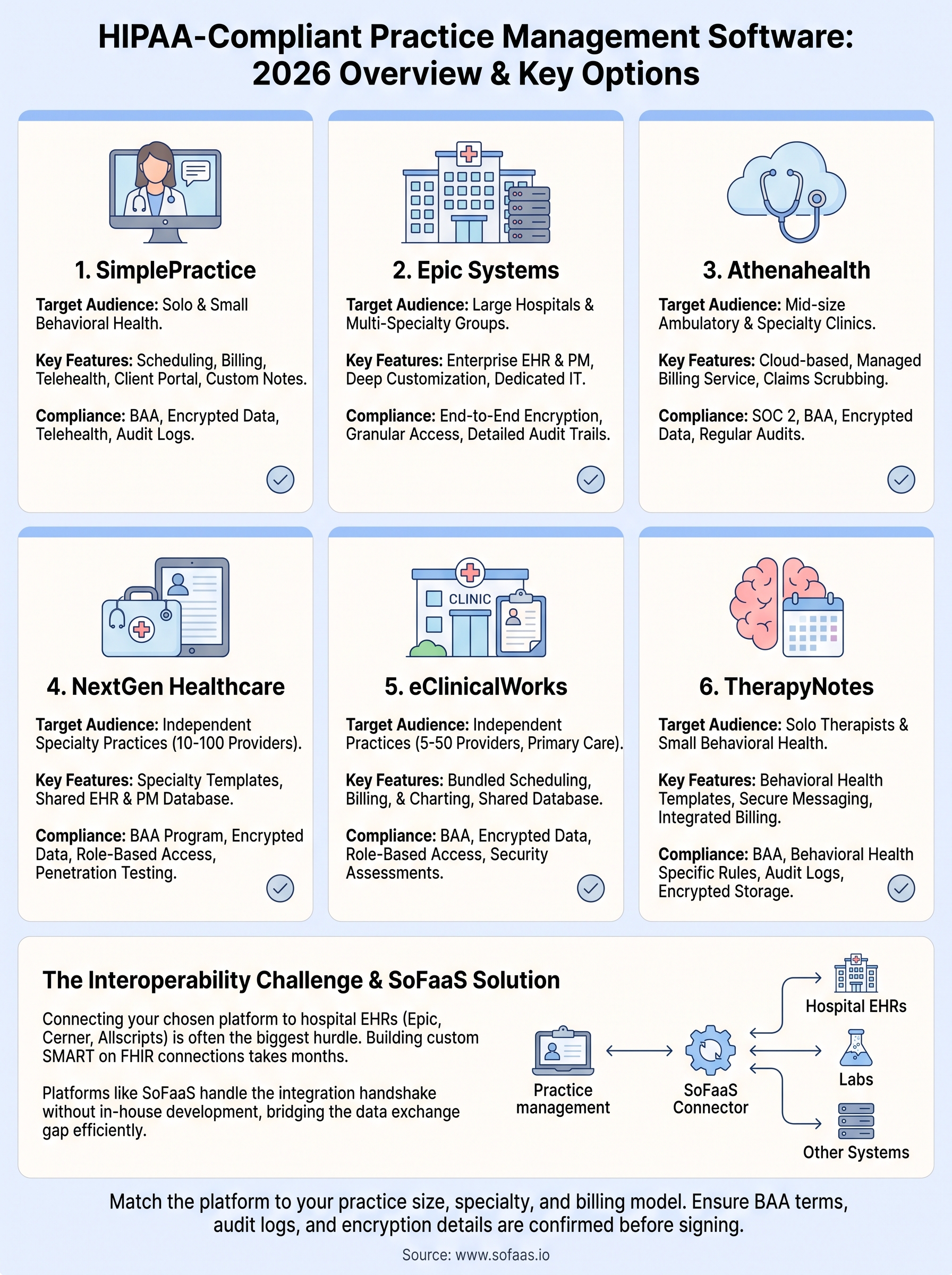
No single platform on this list wins for every practice. A solo therapist needs SimplePractice or TherapyNotes, not Epic. A 40-provider cardiology group needs NextGen's specialty depth, not a scheduling tool built for wellness coaches. Match the platform to your provider count, specialty, and billing model first, then confirm the compliance details (BAA terms, audit logging, encryption specifics) hold up before you sign anything.
Where most practices get stuck isn't picking the practice management tool itself, it's connecting that tool to the hospital EHRs your referral partners already run. Building a SMART on FHIR connection to Epic, Cerner, or Allscripts from scratch takes months and specialized expertise most practices don't have in-house. That's the gap SoFaaS closes. If your next step is pulling or pushing patient data between your chosen platform and outside EHR systems, launch your SMART on FHIR app in a couple of steps instead of building the integration layer yourself.
The Future of Patient Logistics
Exploring the future of all things related to patient logistics, technology and how AI is going to re-shape the way we deliver care.
Thank you! Your submission has been received!
Oops! Something went wrong while submitting the form.